TL;DR
Urgent care can evaluate and treat minor eye trauma, including corneal abrasions (scratches), as long as vision is intact and there’s no penetrating injury or chemical exposure. Vision loss, a visible object embedded in the eye, blood pooling in the eye, or an eye that won’t fully open require emergency care.
It happens. A fingernail catches you mid-blink. A branch snaps back on a hike. A contact lens goes in wrong and suddenly won’t come out. The eye starts watering, closing on its own, and every blink feels like sandpaper.
Eye injuries have a way of feeling more alarming than almost anything else — partly because the eye is so sensitive, and partly because most of us have no idea how to judge whether an injury is minor or serious.
Can urgent care help in situations like these?
What Is a Corneal Abrasion?
A corneal abrasion is a scratch to the clear, dome-like surface at the front of the eye. They are typically caused by minor trauma — a fingernail, a piece of debris, a stray branch, or a contact lens that shifts the wrong way.
Most corneal abrasions are superficial and heal on their own within a few days, but they can be surprisingly painful given how minor the injury looks from the outside.
What Causes Eye Trauma and Corneal Scratches?
Fingers, Fingernails, and Everyday Accidents
A surprising number of corneal scratches happen during ordinary moments — rubbing a tired eye, a child’s fingernail during play, or an accidental poke while putting on makeup.
Contact Lenses
Inserting, removing, or sleeping in contact lenses can scratch the cornea, especially if the lens is dry, torn, or has debris trapped underneath it.
Debris and Foreign Objects
Sand, sawdust, metal shavings, and other small particles can scratch the surface of the eye either on contact or when being rubbed out.
Sports and Outdoor Activity
Branches, balls, and sporting equipment are common culprits during athletic events and outdoor recreation, and their impact can range from a superficial scratch to more significant blunt trauma.
Blunt or Penetrating Trauma
A direct hit from a fist, ball, tool, or other object can cause deeper injury than a simple scratch, including bruising inside the eye, bleeding, or — in rare cases — a rupture of the eyeball itself.
What Are the Symptoms of Eye Trauma or Corneal Scratch?
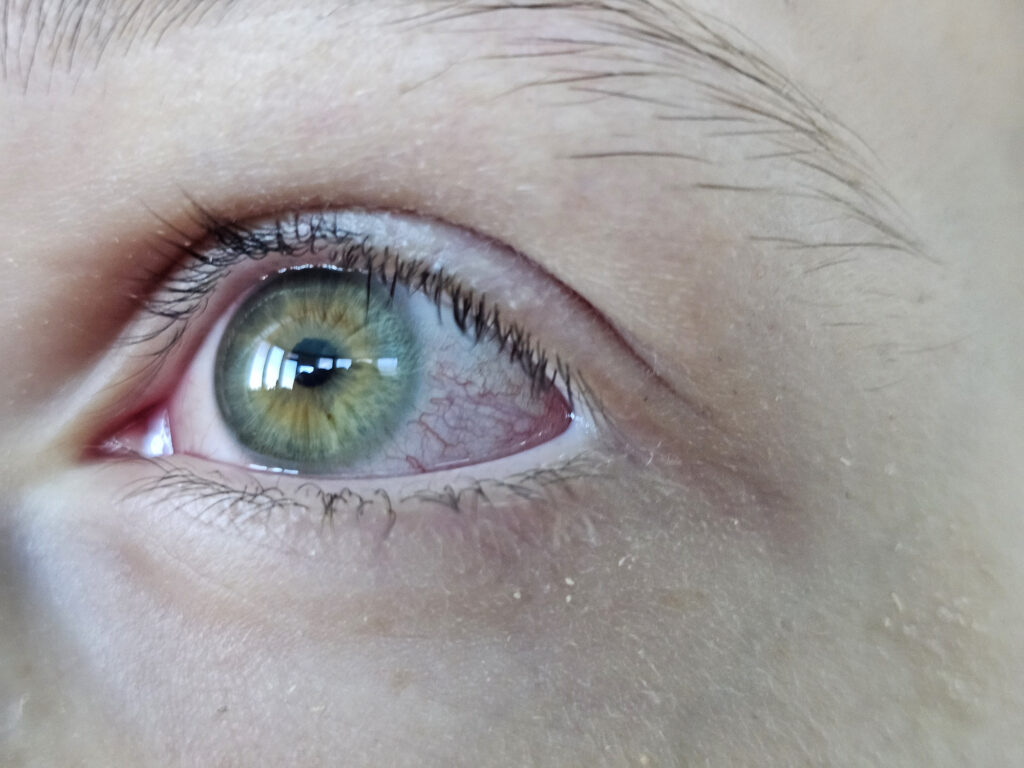
Symptoms can range from mild irritation to significant pain, and often include:
- Sharp pain or a gritty, sandpaper-like sensation
- Redness
- Excessive tearing
- Sensitivity to light
- Blurred vision
- Difficulty keeping the eye open
- A feeling that something is still in the eye
Because the eye is so richly supplied with nerve endings, even a small scratch can feel disproportionately painful.
Should I Go to Urgent Care for a Scratch on the Cornea?
In many cases, minor to moderate eye trauma, including corneal abrasions, can be evaluated and treated at urgent care. FirstCall Medical Center regularly treats eye injuries, including foreign objects in the eye.
Consider urgent care if you have:
- Eye pain or a gritty sensation following minor trauma
- Redness, tearing, or light sensitivity without vision changes
- A suspected scratch from a fingernail, debris, or a contact lens
- Mild blurriness that doesn’t significantly affect your vision
- An eye that’s uncomfortable to keep open
One of our providers can examine the eye, check your vision, look for retained debris, and determine whether the injury is a straightforward abrasion or something that needs a specialist.
When Should Eye Trauma Send You to the ER?
Some eye injuries are bona fide emergencies. Delaying care in these situations can threaten vision. Go to the emergency room — not urgent care — if you experience:
- Sudden or significant vision loss
- A visible object embedded in the eye
- Blood pooling in the colored part of the eye
- An irregularly shaped pupil
- Fluid or gel-like material leaking from the eye
- Chemical exposure to the eye
- An eye that won’t open at all, or a suspected globe injury after a hard direct blow
Note: Chemical splashes are their own emergency: flush the eye with clean water immediately and seek emergency care right away rather than waiting to see if symptoms improve.
How Is a Corneal Scratch Treated?
Treatment largely depends on the cause and severity of the injury.
For a straightforward corneal abrasion, a practitioner may check the eye for retained debris, prescribe antibiotic drops or ointment to prevent infection, and recommend pain relief. Most superficial abrasions heal within a few days.
Contact lenses are typically avoided until the eye has fully healed, since continued lens wear can slow healing and raise infection risk.
More significant injuries — such as suspected globe rupture, a penetrating object, or a chemical burn — require urgent evaluation by an ophthalmologist and are not appropriate for urgent care.
How FirstCall Medical Center Can Help
Eye injuries are unsettling, but most minor to moderate cases don’t require an ER visit.
FirstCall Medical Center can evaluate non-life-threatening eye trauma and determine whether it can be managed through urgent care or requires a higher level of treatment.
Our team can:
- Examine the eye and check visual acuity
- Look for retained debris or foreign material
- Diagnose and treat corneal abrasions
- Prescribe appropriate medication to prevent infection and manage pain
- Refer you to an ophthalmologist or the ER when an injury requires specialist or emergency care
Final Thoughts
Most eye injuries look and feel more frightening than they are, and a scratched cornea — while painful — is usually treatable at urgent care. But the eye doesn’t leave much room for guesswork.
If vision changes, something is embedded in the eye, or the injury involved a chemical or a forceful direct hit, skip urgent care and go straight to the emergency room.
For all other eye concerns, FirstCall Medical Center can get you seen quickly, ease the pain, and get you on the road to healing. Reach out to our team today to learn more.
***
FAQs
How long does a corneal abrasion take to heal?
Most minor corneal abrasions heal within one to three days with appropriate care. Larger or deeper scratches may take longer and should be monitored by a provider.
Can I just flush my eye out at home and skip urgent care?
For minor debris, gentle rinsing with clean water or saline is a reasonable first step. If pain, redness, or the sensation of something in the eye persists afterward, or if vision is affected, consider having your eye evaluated.
Is it safe to wear a contact lens over a scratched cornea?
No. Continuing to wear contact lenses on an injured eye can obstruct healing while increasing the risk of infection. Avoid lenses until a provider confirms the eye has healed.